We may earn money or products from the companies mentioned in this post.

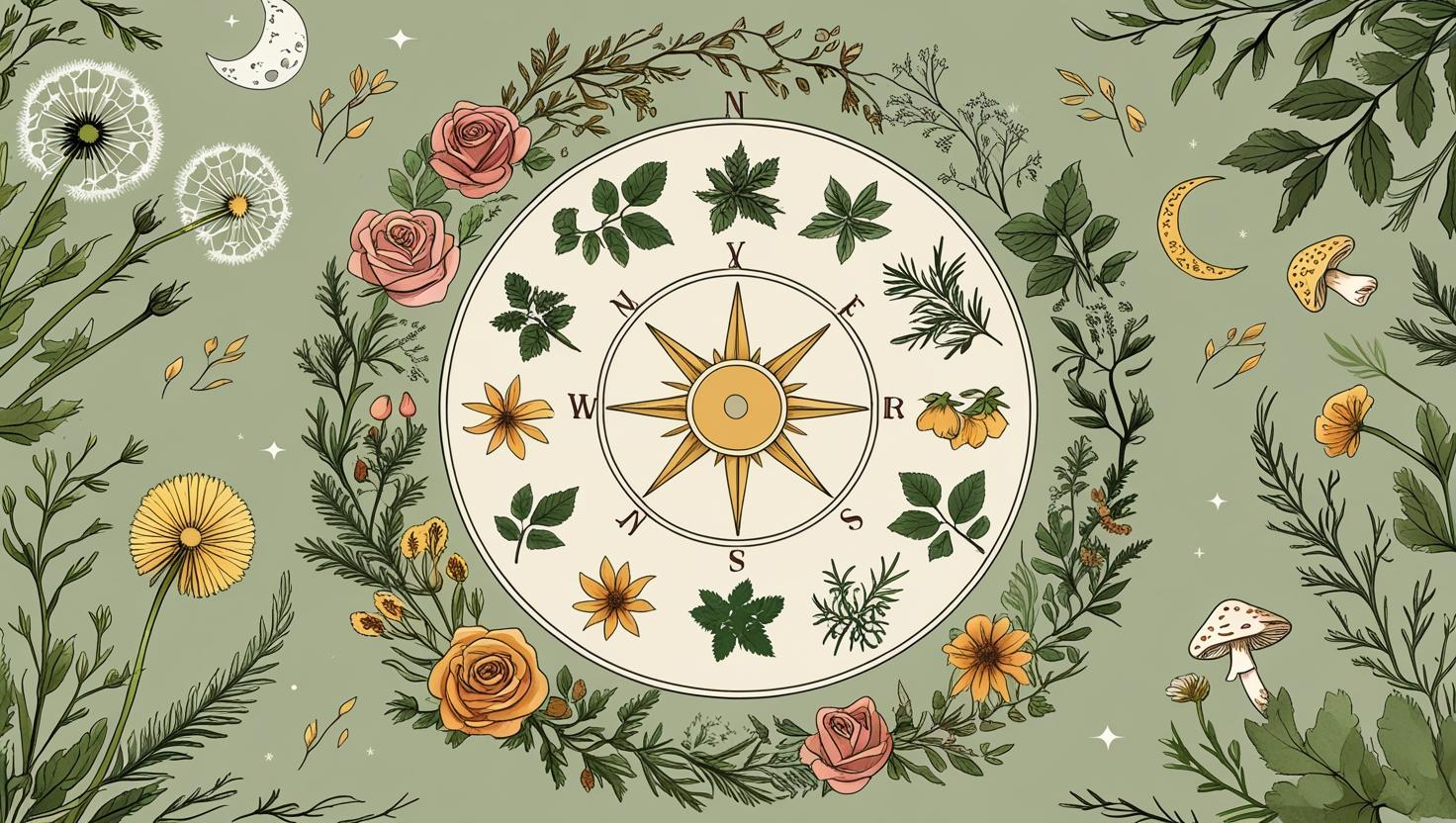
In the heart of folk herbalism lies a deep reverence for rhythm—of the body, the land, and the unseen cycles that govern all living things. Seasonal herbalism invites us to slow down, to listen, and to honor the wisdom of nature’s timing. One of the most powerful tools for aligning your herbal practice with the turning of the seasons is the Wheel of the Year.
Rooted in ancient Celtic and pagan traditions, the Wheel of the Year offers a beautiful, cyclical map that helps us stay connected to seasonal energies, plant allies, and the rituals that nourish both body and spirit. Whether you’re a new herbalist or an experienced wildcrafter, syncing your practice to the wheel will deepen your connection to the plants and the world around you.
What Is the Wheel of the Year?
The Wheel of the Year is a seasonal calendar made up of eight sacred festivals, called sabbats, that mark the solar shifts and cross-quarter days throughout the year. These include the solstices, equinoxes, and four midway points that have long been observed by agricultural and earth-based cultures. Each sabbat represents a distinct phase in the life cycle of nature—from planting and blossoming to harvesting and resting.
The eight sabbats are:
- Yule – Winter Solstice (mid-December)
- Imbolc – Early February
- Ostara – Spring Equinox (mid-March)
- Beltane – May 1st
- Litha – Summer Solstice (mid-June)
- Lughnasadh – August 1st
- Mabon – Autumn Equinox (mid-September)
- Samhain – October 31st
These festivals are not just markers of time—they’re invitations. Each one carries a specific energy, seasonal medicine, and opportunity to connect with plants that thrive at that moment. Aligning your herbalism with the Wheel of the Year means allowing nature’s pulse to guide your remedies, rituals, and rest.

Why Practice Seasonal Herbalism?
Plants are not static. They change with the seasons—shifting their potency, their availability, and the way they interact with our bodies. When we work with herbs seasonally, we honor their life cycle and our own.
The benefits of seasonal herbalism:
- Supports your body’s natural rhythms (e.g., spring detox, winter immunity)
- Improves the potency and timing of your remedies
- Creates a deeper relationship with local plants and wildcrafting
- Infuses your practice with ritual and intention
- Reconnects you to ancestral wisdom and seasonal living
The Wheel of the Year Through the Lens of Herbalism
🌲 Yule (Winter Solstice): Rest & Reflection
The longest night, the seed of light. Yule marks the return of the sun after the darkest day of the year. It’s a time for rest, dreaming, and gentle nourishment.
Herbal Themes: Immune support, lung health, warming, rest
Plant Allies: Pine, fir, elderberry, rose hips, mullein
Practices:
- Brew immune-boosting teas and syrups
- Make evergreen-infused salves
- Craft dream pillows with lavender and mugwort
- Reflect and plan for the coming herbal year
🔥 Imbolc: Awakening & Purification
Imbolc is the whisper of spring stirring beneath the snow. Associated with the goddess Brigid, this sabbat honors healing, inspiration, and cleansing.
Herbal Themes: Liver support, gentle detox, new beginnings
Plant Allies: Chickweed, nettle, dandelion root, calendula
Practices:
- Begin spring cleansing teas
- Forage early greens (like chickweed) if the snow recedes
- Craft herbal blessing waters
- Light candles to honor Brigid and your herbal path
🌼 Ostara (Spring Equinox): Balance & Renewal
Day and night are in perfect balance, and the earth begins to bloom. Ostara is a celebration of new life, fertility, and forward movement.
Herbal Themes: Digestion, energy, vitality
Plant Allies: Dandelion, violet, cleavers, mint
Practices:
- Create flower essence blends
- Make digestive bitters and spring tonics
- Begin garden planting or wildflower walks
- Craft seasonal tinctures from tender greens
🔥 Beltane: Passion & Fertility
Beltane bursts forth with fire and bloom. It’s a festival of sensuality, creativity, and full-bodied life. This is a time to revel in the beauty of the land.
Herbal Themes: Heart-opening, vitality, reproductive health
Plant Allies: Hawthorn, rose, oatstraw, red clover
Practices:
- Make flower crowns and love potions
- Infuse oils with hawthorn or rose petals
- Sip nourishing herbal infusions
- Celebrate outdoors with wildcrafted herbal feasts
☀️ Litha (Summer Solstice): Abundance & Protection
The sun is at its peak. Litha celebrates abundance, vitality, and the fullness of life. It’s also a time of gathering and preserving.
Herbal Themes: Nervous system support, joy, solar energy
Plant Allies: St. John’s wort, lavender, chamomile, yarrow
Practices:
- Harvest and dry summer herbs
- Make solar-infused oils and flower vinegars
- Craft protective herb bundles
- Host an herbal tea picnic or workshop
🌾 Lughnasadh: Gratitude & First Harvest
The first fruits of the harvest are ready. Named after the god Lugh, this festival celebrates craftsmanship, grain, and gratitude.
Herbal Themes: Nourishment, preparation, immune building
Plant Allies: Mugwort, sage, goldenrod, elder
Practices:
- Bake bread with herb infusions
- Craft elderberry syrup or fire cider
- Offer herbal gifts back to the land
- Begin stocking your winter apothecary
🍂 Mabon (Autumn Equinox): Balance & Letting Go
Once again, light and dark are equal. Mabon is a time of reflection, transition, and gathering what you’ve grown—within and without.
Herbal Themes: Immunity, grounding, grief
Plant Allies: Echinacea, astragalus, reishi, rose hips
Practices:
- Prepare tinctures and tonics for fall
- Make grounding root teas and adaptogen blends
- Burn herbal incense in gratitude
- Reflect with plants on what you’re ready to release
🖤 Samhain: Ancestors & Shadow
The final harvest and the thinning of the veil. Samhain honors death, transition, and ancestral connection. It’s the witch’s New Year and the time for deep medicine.
Herbal Themes: Protection, intuition, grief work
Plant Allies: Mugwort, wormwood, angelica, rosemary
Practices:
- Build an ancestor altar with sacred herbs
- Burn mugwort bundles for visioning
- Brew dark, earthy teas for inner work
- Journal with plant allies for shadow exploration

🌿 Tips for Practicing Seasonal Herbalism in Accordance with the Wheel of the Year
- Start a seasonal journal: Track herbs, rituals, weather, and your body’s needs.
- Observe your local ecosystem: Learn which wild plants emerge when in your bioregion.
- Harvest respectfully: Follow ethical foraging guidelines and only take what is sustainable.
- Make small-batch remedies: Let the season guide what you brew, infuse, or craft.
- Ritualize your practice: Even simple tasks like sipping tea or planting seeds can become sacred.
🌙 In Closing on the Wheel of the Year
Seasonal herbalism is more than matching herbs to symptoms—it’s a practice of relationship, ritual, and reverence. The Wheel of the Year offers a sacred structure that keeps you rooted in the cycles of nature and in tune with the wisdom of the plants.
When we listen to the land, when we let the seasons guide our craft, we become part of something ancient and alive. May your herbal practice grow wild and wise, in harmony with the ever-turning wheel.
2 responses to “How to Align Your Herbal Practice with the Wheel of the Year”
[…] How to Align Your Herbal Practice with the Wheel of the Year […]
[…] How to Align Your Herbal Practice with the Wheel of the Year […]