We may earn money or products from the companies mentioned in this post.

In an era of constant innovation, trending ingredients, and ever-changing skincare routines, it’s easy to believe that new automatically means better. But as more women return to ancestral ingredients in their skincare, it’s becoming clear that wisdom often runs deeper than trends — especially when caring for the skin, an organ deeply connected to the nervous system, hormones, and overall health.
For centuries, women relied on simple, whole ingredients sourced from the land: organic herbs infused in oils, animal fats like grass-fed tallow, mineral clays, and botanical waters. These ingredients weren’t marketed as luxury — they were luxury, because they were nutrient-dense, thoughtfully prepared, and deeply compatible with the human body.
Today, as modern skincare becomes increasingly complex, many are rediscovering what our ancestors already knew: the skin thrives when supported, not overridden.
This is why ancestral ingredients still matter — and why they feel more relevant now than ever. As seasons change, these time-tested ingredients continue to support the skin in practical ways, especially during colder months when barrier support becomes essential. For a deeper look at how botanical, whole-ingredient care supports the skin in winter, explore our guide to herbal skincare for winter.
Ancestral Ingredients as Traditional Luxury
Luxury skincare didn’t begin in laboratories. It began in kitchens, gardens, and apothecaries.
Historically, only those with access to clean land, healthy animals, and skilled herbal knowledge could create high-quality body care. Organic herbs grown without chemicals, slow-infused oils, and rendered fats from pasture-raised animals were precious resources. These ingredients required time, patience, and respect for natural cycles — qualities rarely found in modern mass production.
Grass-fed tallow, for example, was once a cornerstone of skincare across cultures. Rich in fat-soluble vitamins A, D, E, and K, tallow closely mirrors the lipid profile of human skin. It provides nourishment without disruption, offering moisture, resilience, and protection.
Grass-fed tallow has been valued for traditional skincare across cultures not just for its nourishing fats but also for its richness in fat-soluble vitamins and compatibility with the skin’s natural lipid structure — a concept supported by historical and nutritional research on traditional skin care practices and fats.
(Learn more about the nourishing, healing role of traditional fats in skin care here.)
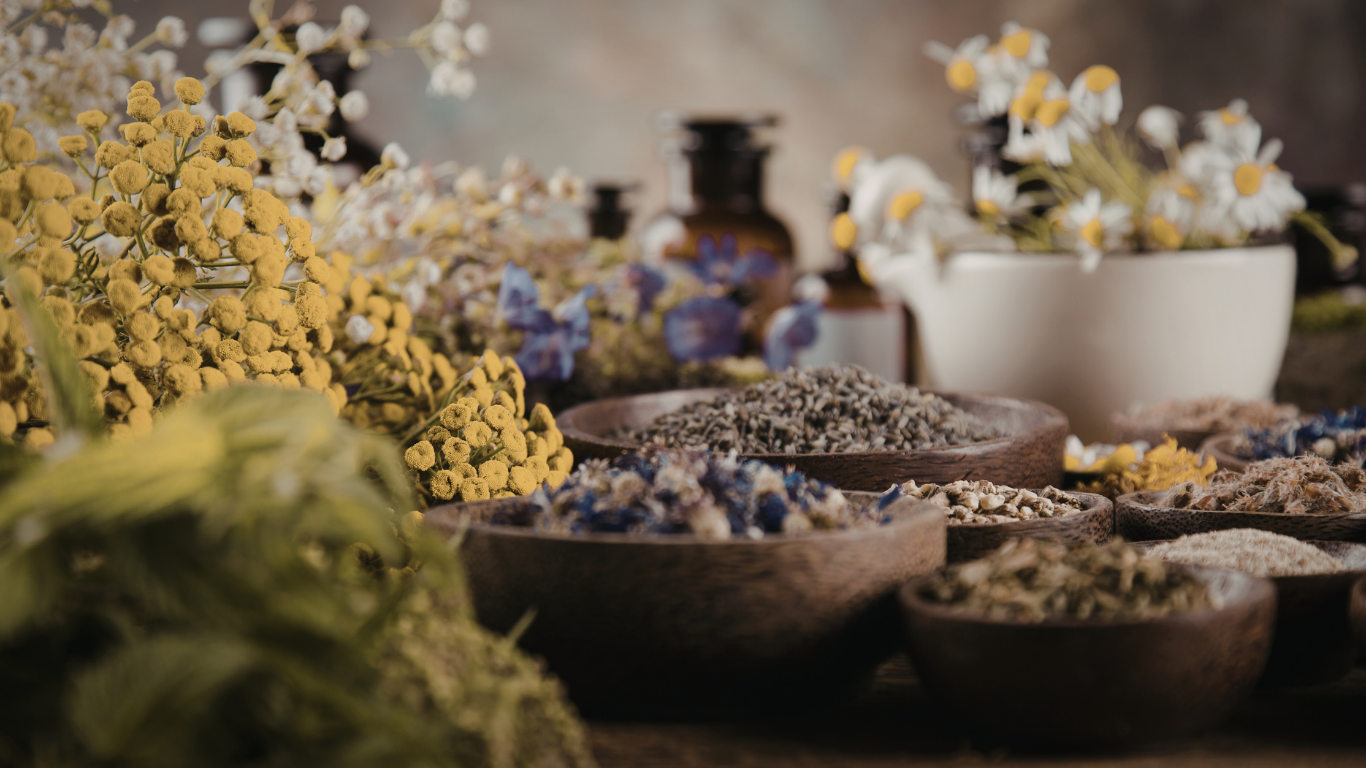
Similarly, organic herbs like calendula, chamomile, lavender, and plantain were used to calm inflammation, support repair, and soothe sensitive skin long before synthetic actives existed.
True luxury wasn’t about excess — it was about quality, compatibility, and care.
The Whole-Ingredient Philosophy
One of the biggest differences between ancestral skincare and modern formulations is the whole-ingredient approach.
Modern skincare often isolates compounds — extracting one “active” while discarding the rest. While this can be effective short-term, it sometimes overwhelms the skin or disrupts its natural balance.
Whole ingredients work differently.
When you use an herb-infused oil or a tallow-based balm, you’re applying a synergy of naturally occurring nutrients that evolved together. The skin recognizes these structures. They don’t force change — they support function.
This philosophy values:
- minimal processing
- nutrient density
- ingredient integrity
- balance over intensity
Instead of chasing fast results, whole-ingredient skincare asks a different question:
“What does the skin need to do its job well?”

Respecting the Body’s Intelligence with Ancestral Ingredients
The skin is not a problem to fix — it is a system to support.
It regulates temperature, protects against pathogens, communicates with the nervous system, and reflects internal health. When skincare constantly attempts to correct, strip, exfoliate, or stimulate, the skin often responds with sensitivity, imbalance, or dependency.
The structure and function of the skin’s barrier — particularly the stratum corneum — are central to how the body maintains moisture balance and protects against external stressors; detailed physiological discussions help explain why supporting this barrier with nourishing ingredients is so foundational. (Learn more about the fundamentals of skin barrier physiology from clinical research here.)
Ancestral ingredients respect the body’s innate intelligence.
Grass-fed tallow reinforces the skin barrier instead of replacing it. Herbal infusions gently encourage repair rather than forcing turnover. Natural lipids help the skin regulate itself over time.
This approach aligns with a broader understanding of wellness — one that trusts the body’s capacity to heal when given the right conditions.
Skincare becomes a conversation rather than a command.
Why Trends Fade, but Wisdom Remains
Trends are built for novelty. Wisdom is built for longevity.
Many modern skincare trends cycle quickly:
- harsh exfoliation phases
- extreme actives
- complicated 10-step routines
- constant product switching
While innovation has its place, constant stimulation often leads to barrier damage, sensitization, and confusion about what the skin actually needs.
Ancestral skincare endures because it’s rooted in observation, repetition, and long-term results. These practices were passed down not because they were exciting — but because they worked.
Wisdom remains when trends fall away.

Creating an Ancestral-Inspired Skincare Routine
An ancestral approach to skincare doesn’t require dozens of products. It asks for intention and consistency.
A Simple Routine Rooted in Tradition and Ancestral Ingredients
Cleanse
- Use a gentle cleanser that doesn’t strip natural oils
- Avoid harsh surfactants
Nourish
- Mist or apply a simple, ancestral toner such as witch hazel or rose water to balance and refresh the skin
- Apply a botanical serum or herbal-infused oil
- Massage slowly to encourage circulation and relaxation
Protect & Restore
- Seal with a tallow-based balm or cream
- Especially important in the evening when the skin repairs itself
This routine supports the skin’s natural rhythm rather than interrupting it.
Choosing Products with Ancestral Integrity
When selecting skincare rooted in ancestral wisdom, look for:
- organic, thoughtfully sourced herbs
- grass-fed or pasture-raised animal fats
- minimal ingredient lists
- transparency in sourcing and preparation
- products designed to support, not overwhelm
Herbal salves are a beautiful example of this philosophy in practice, combining infused botanicals with nourishing fats to support the skin barrier naturally. If you’d like to explore this more deeply, you can read about the benefits and traditional uses of herbal salves for the skin.
Quality matters more than quantity.
Tips for Transitioning Away from Trend-Driven Skincare
If you’re used to highly active or complex routines, transitioning slowly is key.
Tips:
- simplify your routine gradually
- give your skin time to adapt
- focus on barrier support
- resist the urge to constantly switch products
- observe how your skin responds over weeks, not days
Patience is part of the ritual.

Returning to Wisdom with Ancestral Ingredients
Modern skincare doesn’t need to reject innovation — but it benefits from remembering its roots.
Ancestral ingredients like organic herbs and grass-fed tallow remind us that care doesn’t need to be complicated to be effective. When we honor whole ingredients, respect the body’s intelligence, and choose wisdom over trends, skincare becomes more than maintenance.
It becomes a ritual of trust.
A return to what has always worked.
And an invitation to slow down, nourish deeply, and care with intention — season after season.
