
We may earn money or products from the companies mentioned in this post.

In a culture that celebrates constant motion, productivity, and endless optimization, evening often arrives quietly—almost unnoticed. Yet across history, cultures, and seasons, the hours after sunset have always held significance. Evening is a threshold. A time to soften, to return inward, to prepare the body and spirit for rest. An evening ritual is not an indulgence or aesthetic routine. It is an act of care—rooted in tradition, guided by the rhythms of nature, and deeply supportive of women’s wellness. When practiced with intention, evening rituals become a sustainable way to nourish the body while honoring the Earth.
This is not about doing more. It is about doing less, better.
What Is an Evening Ritual?
An evening ritual is a repeated, intentional practice that signals to the body that the day is complete. Unlike routines, which are often task-oriented and rigid, rituals are sensory and relational. They involve touch, warmth, scent, and stillness.
Historically, evening rituals were woven into daily life: herbal infusions steeped as dusk fell, oils applied to weathered skin, prayers or reflections spoken before sleep. These practices supported digestion, rest, hormonal balance, and emotional regulation long before modern wellness language existed.
Today, reclaiming an evening ritual is an act of resistance against excess—excess stimulation, excess consumption, excess speed.
Why Choose an Evening Ritual Over Routine
Routines are designed for efficiency; rituals are designed for relationship. A routine asks, What do I need to get done? A ritual asks, How do I want to feel, and what does my body need right now? When care becomes routine, it can easily slip into obligation or excess—more steps, more products, more pressure to optimize. Rituals, by contrast, invite presence. They slow the body, engage the senses, and create meaning through repetition rather than complexity. Choosing ritual over routine allows self-care to become responsive instead of rigid, supportive rather than extractive. It naturally encourages restraint, intention, and sustainability—both in how we care for ourselves and in how much we consume.

Why Evening Rituals Matter for Women’s Wellness
Women’s bodies are cyclical, responsive, and deeply attuned to rhythm. Evening rituals support this natural design by:
- Regulating the nervous system after a day of stimulation
- Supporting hormonal balance through rest and gentle nourishment
- Improving sleep quality, which is foundational to wellness
- Encouraging mindful self-touch, fostering body trust and awareness
- Reducing reliance on overconsumption of products and trends
Research on circadian rhythms shows that light exposure and evening habits play a key role in signaling rest and regulating sleep cycles.
Evening is when the body shifts from sympathetic (doing) to parasympathetic (resting) mode. Rituals help facilitate this transition gently and sustainably.
Evening Ritual Over Routine: A More Sustainable Approach to Self-Care
Modern self-care often mirrors the same extractive mindset it claims to heal—endless products, complicated routines, and constant upgrades. Evening rituals offer an alternative.
A ritual-based approach emphasizes:
- Fewer, higher-quality products
- Ingredients that work harmoniously with the body
- Practices that are meant to be repeated, not replaced
- Sustainability through restraint, not abundance
When care becomes ritual, consumption naturally slows. Products are used fully, appreciated deeply, and chosen intentionally.
This is care that respects both the body and the Earth.
Building a Grounded Evening Ritual
An effective evening ritual does not need to be elaborate. In fact, simplicity is often what makes it sustainable.
Here are foundational elements to consider:
1. A Gentle Transition
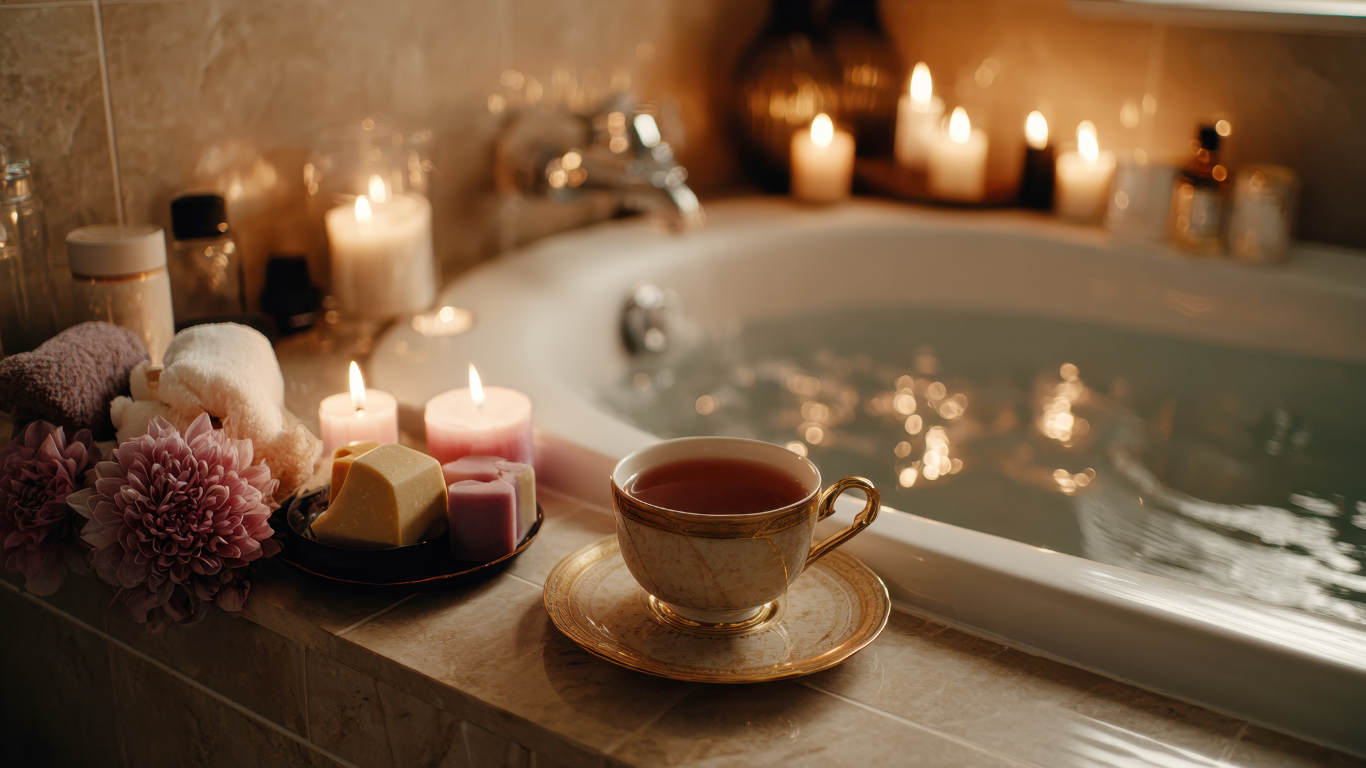
Begin by creating a clear boundary between day and evening. This might look like dimming lights, lighting a candle, or stepping outside to notice the change in air and sky.
This moment signals to the nervous system that it is safe to soften.
2. Herbal Support
Herbal teas and tinctures have long been used in the evening to support digestion, relaxation, and sleep. Herbs such as chamomile, lemon balm, oat straw, and rose gently nourish without forcing the body into rest. A deeply cleansing tincture, such as a dandelion tincture, can help support the liver and reduce the stress of toxins in the body. In this article, I teach you How to Make a Dandelion Tincture to cleanse your skin from the inside out.
Choosing organic, thoughtfully sourced herbs ensures both potency and sustainability.
3. Skin as Ritual
Evening skin care is not about correction—it is about protection and restoration.
Applying a simple, nutrient-dense salve or balm made with grass-fed tallow and botanical infusions allows the skin to receive nourishment in its natural repair cycle. Tallow closely mirrors the skin’s own lipid profile, making it especially supportive overnight.
Take time. Warm the product between your hands. Apply slowly.
4. Stillness
Even five minutes of intentional stillness—without scrolling, consuming, or performing—can profoundly shift the nervous system. This may be journaling, breathwork, prayer, or simply lying down and listening.
Stillness is not empty time. It is integration.

Seasonal Evening Rituals
At Frost & Fern, we root our wellness practices in seasonal living. Evening rituals naturally shift throughout the year, reflecting the needs of both body and environment.
Autumn
As days shorten, evening rituals emphasize grounding and warmth. Rich herbal infusions, thicker balms, and earlier rest support the body’s transition inward.
Winter
Winter rituals are deeply restorative. Slow evenings, heavy nourishment, and minimal stimulation allow the body to conserve energy and repair. Winter’s cold and dry air can cause skin issues to become prominent. Learn to nourish your skin with Herbal Skincare for Winter.
Evenings in spring may include lighter teas, gentle detoxification support, and reflective practices that mirror renewal.
Summer
Summer rituals focus on cooling and calming—simple hydration, light oils, and intentional wind-down despite longer daylight hours.
Seasonal rituals reduce strain by aligning care with natural cycles instead of resisting them.
Sustainability Begins With How We Care for Ourselves
Sustainability is often framed as an external effort—what we buy, recycle, or avoid. But true sustainability begins internally.
When we:
- choose quality over quantity
- respect the body’s need for rest
- slow consumption
- honor seasonal rhythms
We naturally reduce waste, excess, and depletion.
Evening rituals teach us restraint, patience, and presence—values that extend beyond self-care and into how we engage with the world.
Evening Rituals as Ancestral Wisdom
Long before wellness became an industry, evening rituals were woven into daily survival and care. Herbal remedies were prepared at home. Skin care was protective and functional. Rest was not optional—it was essential.
Reclaiming these practices is not about nostalgia. It is about remembering what the body already knows.
When we practice ritual care, we step into a lineage of women who understood that health is cultivated slowly, intentionally, and in relationship with nature.

Creating Your Own Evening Ritual
Your ritual does not need to look like anyone else’s. Begin with curiosity, not obligation.
Ask yourself:
- What helps me feel safe and calm?
- What does my body crave in the evening?
- What can I do consistently, without strain?
Start small. Let your ritual evolve.
The goal is not perfection. It is presence.
A Practical Evening Ritual (An Invitation, Not a Rule)
An evening ritual can be simple, comforting, and deeply personal. One example might look like this:
- Change into something soft and comfortable—a favorite sweater, linen pajamas, or a well-worn robe—to physically mark the transition from the day into rest.
- Create a calming atmosphere by dimming the lights, lighting a candle, or adding a few drops of a grounding essential oil to your space, allowing scent to gently signal the nervous system to slow.
- Cleanse the skin slowly, washing the face with warm water and mindful touch, releasing the day rather than rushing through the process.
- Apply skincare as ritual, layering a nourishing serum and moisturizer or balm, pressing the product into the skin with intention and allowing warmth and breath to be part of the process.
- Settle into stillness with a cup of herbal tea, a few pages of a book, journaling, or quiet reflection—choosing something that calms rather than stimulates.
- End without urgency, allowing the ritual to close naturally as you prepare for rest, rather than moving immediately into sleep out of habit.
Practiced consistently, this kind of evening ritual becomes a gentle rhythm—one that supports the skin, soothes the body, and creates a reliable sense of calm at the close of each day.
A Closing Reflection
Evening rituals remind us that care does not have to be loud, complicated, or consumptive. It can be quiet. Repetitive. Grounded.
By choosing ritual over routine, and integrity over excess, we create space for both personal wellness and planetary care.
As the day softens, may your evenings become a place of return—back to the body, back to rhythm, back to what sustains.
Rooted in nature. Guided by season. Crafted with care.
Leave a Reply